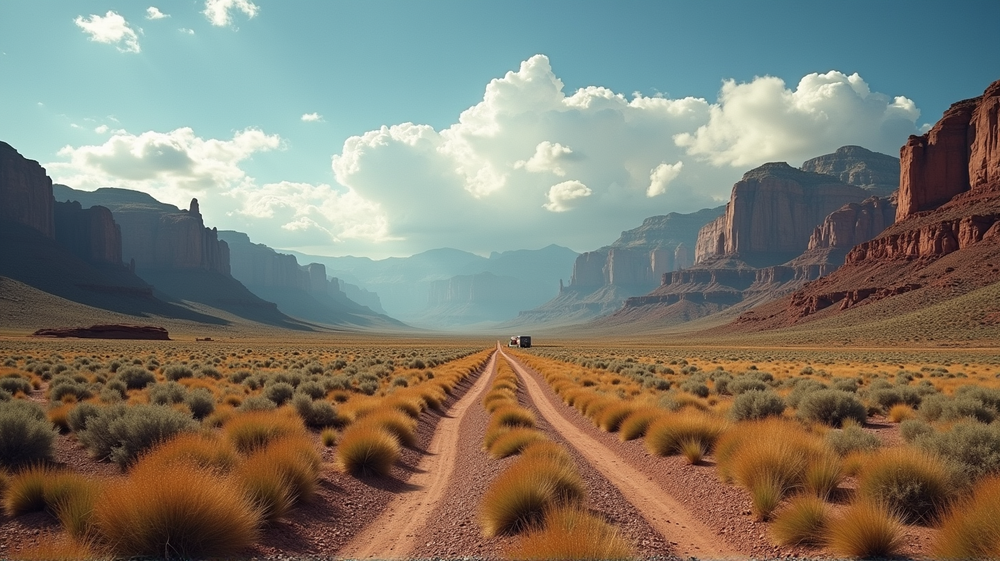
America’s outdoor recreation industry is thriving like never before, injecting a staggering \(1.2 trillion into the economy in 2023. This vibrant sector not only enriches public life but firmly establishes itself as a significant economic player, challenging traditional industries. According to Deseret News, public lands alone contribute a colossal \)351 million daily to the U.S economy.
The Intrinsic and Economic Value
While majestic landscapes hold intrinsic value, recent data highlight their substantial economic contributions. Doug Burgum, Secretary of the Interior, advocates for recognizing this bounty, sparking debate over whether natural beauty can and should be quantified. His stance underscores the dual nature of public lands — as priceless wonders and invaluable economic assets.
Figures that Speak Volumes
The Outdoor Recreation Roundtable (ORR) illustrates the massive scale of this industry. In 2023, the industry generated \(128 billion from public lands alone, with visitors spending \)27 billion directly in national parks. Such figures challenge the narrative that resource extraction is the primary use of federal lands. In economic terms, outdoor recreation outpaces traditional sectors like farming and mining.
A Broader Perspective on Wildlife
A fascinating aspect of this economic analysis is animal sightings. Economists have quantified the value of seeing iconic wildlife, like Yellowstone’s bears. Calculations suggest that individual grizzly bears and black bears contribute millions annually to the local economy, demonstrating a shift in how we value natural experiences.
A National Investment
Jessica Turner, president of ORR, emphasizes that public lands are a national investment yielding returns far beyond dollars. They fuel local economies, strengthen rural businesses, and connect us to shared heritage. By reinforcing the economic impact of public lands, ORR hopes to position outdoor recreation alongside more traditional industries as pivotal economic drivers.
Continued Growth and Recognition
Since Congress mandated the study of the sector in 2016, its growth has exceeded 36%. Today, it supports over 5 million jobs, accounting for more than 3% of the U.S. workforce. The industry’s expansion, surpassing many conventional sectors, signifies a paradigm shift in how America views its natural resources.
By disseminating these insights, Turner and her colleagues aim to align public policy with the reality that America’s outdoor spaces are more than picturesque landscapes. They are a powerhouse of economic activity with the potential to sustainably support and enhance the nation’s economy for generations.
With economic figures as grand as the scenery they represent, the outdoor recreation economy shows no signs of slowing down. It’s a realization for businesses, policymakers, and nature-lovers alike—a landscape of opportunities where everyone stands to gain.