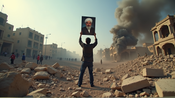
“Censorship is the child of fear and the father of ignorance,” said poet Laurie Halse Anderson, a sentiment that resonates deeply with recent events at The Fletcher School of Law and Diplomacy, Tufts University. “The Tufts Daily" target="_blank">Israel and Palestine: Assessment and Community Dialogue,” held on November 17, shed light on a pressing concern: the erasure of inconvenient truths in academic discourse.
The Erosion of Indigenous Histories
During the event, statements erasing the Jewish indigenous history were not only made but went unchallenged. The depiction of Israel as merely a colonial project neglects its deeply rooted history, from biblical times through diaspora and return, embracing its unique anti-colonial resurgence. With the majority of its current populace descending from Jews expelled from Middle Eastern and North African Arab states, the narrative loses richness and truth when oversimplified.
A One-Sided Humanitarian Perspective
While discussing atrocities, the focus was resolutely on Gazan victims, sidelining Israeli suffering, evidenced by the heinous October 7, 2023 attacks by Hamas that unleashed terror beyond measure. Such selective storytelling fails to capture the multifaceted human pain and resilience on both sides of the divide.
The Redefinition of Conflict
The words employed to describe the ongoing conflict—particularly the term “genocide” applied to Israeli defensive actions—reveal biases that ignore critical components of international law. Genocide carries a loaded definition necessitating intent to obliterate, a qualification absent in a defensive context.
The Call for Comprehensive Education
At The Fletcher School, there exists a palpable gap in facilitating thorough understanding. For years, voices have urged the university administration to revamp curriculum and discussions to foster an environment that respects and grapples with the inherent complexity of the Middle Eastern landscape. Yet, the response has been lacking, evident in events that display scant progress.
Moving Beyond Simplification
The Tufts community stands at a crossroads, with an essential choice: to encourage a discourse of depth and breadth, or to remain ensnared in reductive dichotomies of oppressor and oppressed. As echoed by President Kumar, the onus lies on educational institutions to mold minds that can engage with ambiguous and thorny realities, unhindered by fear and unshackled by ignorance.
In light of this, the significance of nurturing platforms for robust, nuanced dialogue cannot be overstated. The quest for truth and understanding must transcend institutional inertia and narrative erasures to truly educate and enlighten.
A Call to Action
The events at Tufts serve as a stark reminder that the path to enlightenment is fraught with discomfort and requires courage—courage to listen, acknowledge, and embrace the messy truth of human histories and relationships. Educators and institutions must rise to this challenge, not just at Tufts, but beyond. Only through rigorous and honest engagement can we hope to replace ignorance with understanding.
Joel P. Trachtman, Professor of International Law Emeritus, lends his voice as a clarion call for action—an emblem to educate, not indoctrinate.