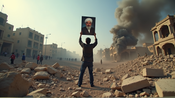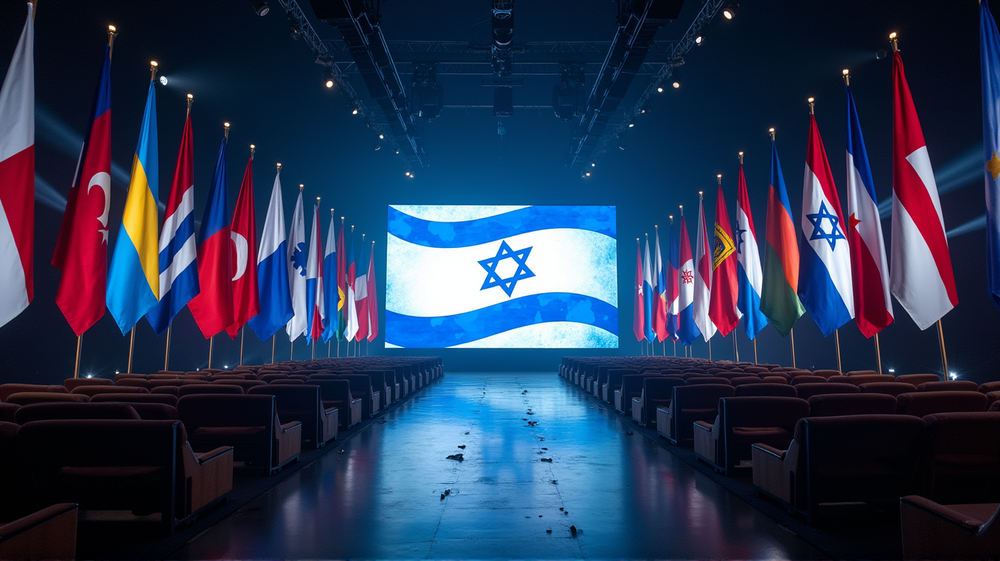
The glitzy stage of Eurovision, usually a beacon of unity and celebration through music, is facing an unprecedented political upheaval. The decision to allow Israel’s participation in the 2026 contest has spurred significant backlash, leading to the withdrawal of at least four countries: Ireland, the Netherlands, Spain, and Slovenia.
Discord in the Heart of Eurovision
The theme for 2026, “United by Music,” ironically unfolds against a backdrop of disunity and political discord. Member countries and organizers recently convened in Geneva, where the decision to include Israel, a controversial choice due to its actions in the Gaza conflict, sowed seeds of dissent and disengagement. According to AP News, this development has put political disputes at the forefront of an event that traditionally celebrates cultural harmony.
Reactions and Rationale
Public broadcasters in the withdrawing countries have cited the ongoing geopolitical tensions and humanitarian issues as primary reasons for their exit. Spain’s RTVE and Ireland’s RTÉ, in particular, highlighted the difficulty in maintaining Eurovision as a neutral cultural exchange amid the crisis in Gaza. The participation of Israel, they argue, conflicts with their ethical responsibilities as broadcasters.
Israeli Participation: Support and Opposition
While Israeli President Isaac Herzog expressed satisfaction with Israel’s continued involvement, emphasizing cultural camaraderie and international friendship, the controversy persists. Countries like Austria, Germany, and Switzerland have shown support for Israel’s entry, whereas others have distanced themselves, questioning both the ethical and cultural ramifications of such a decision.
Eurovision’s Strained Fabric of Unity
The annual contest, which draws over 100 million viewers worldwide, has often strived to transcend politics; yet, it finds itself embroiled in one of its most significant challenges. The ongoing war in Gaza has already led to protests threatening the joyous essence of Eurovision, and further boycotts could diminish its quintessential spirit of pan-European unity.
The Impact of Withdrawals
As a potential ripple effect of these withdrawals looms large, many broadcasters are reconsidering their participation, a dynamic that could lead to additional exits. The anticipated list of participants, to be confirmed by Christmas, is fraught with uncertainty, overshadowing the milestone 70th anniversary celebrations planned for Vienna.
The Road Ahead
Looking forward, Eurovision expert Dean Vuletic warns of political controversies that threaten to eclipse the musical festivities in 2026. This event, intended to mark a jubilant anniversary, risks becoming ensnared by international tensions and disputes, reminding us of the complex interplay between world affairs and the universal language of music.
In conclusion, Eurovision 2026 stands at a crossroads, where its core ideals of harmony and artistic celebration are tested by the broader geopolitical landscape. As the countdown to Vienna continues, the contest will remain under the spotlight for more than just its melodies.