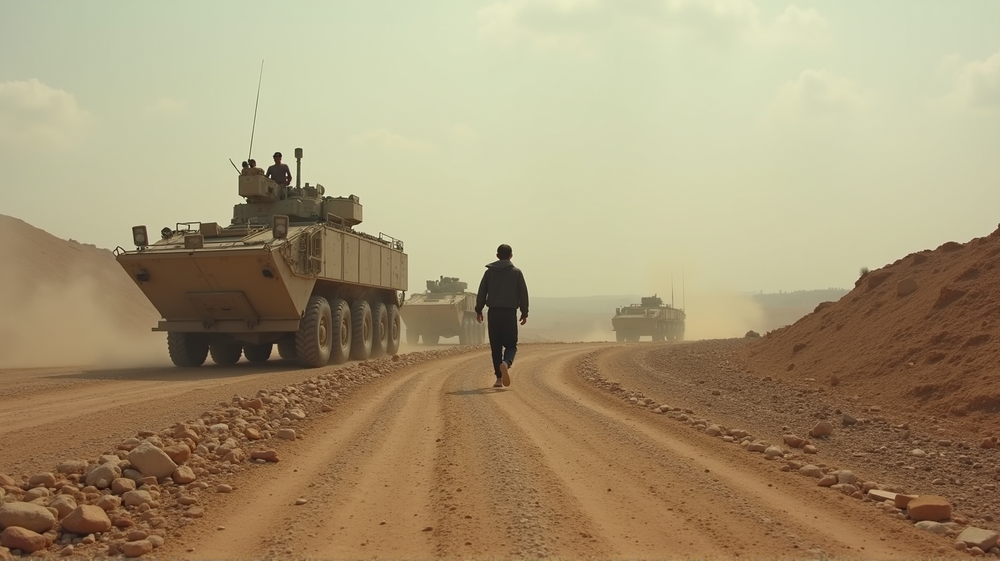
In a region scarred by years of conflict with hopes for peace, a new chapter unfolds in southern Syria - one marred by fear and military presence. Residents like Abu Ibrahim awaken to the relentless sounds of tanks and gunfire, marking the unwelcome arrival of Israeli forces. It has been a year since the fall of Assad, but instead of newfound freedom, they face occupation under a foreign power.
The Day Assad Fell
The transition from a repressive regime to military occupation was swift and haunting for Quneitra’s inhabitants. On the morning after Assad’s regime crumbled, Israeli troops rolled into the province, previously governed by Assad’s militias. The semblance of liberation was quickly overshadowed by the reality of a foreign military dominance that came with its own set of challenges and rules.
Life Under Occupation
According to residents like Ibrahim, the supposed security provided by the Israeli forces feels more like an oppressive grip. Night raids, checkpoints, and searches have become commonplace. The Israeli defense justifies its presence as a necessity to protect borders, but for many Syrians, each raid and checkpoint erodes the faintest hope of normalcy post-conflict. “We hoped for peace, but this is another form of tyranny,” says Ibrahim’s neighbor, reflecting a shared sentiment among locals.
Crushed by Conflict
Beit Jinn stands as a stark reminder of the new reality. The end-of-November Israeli incursion left a trail of devastation, with civilians, including children, among the casualties. Occupation is no longer theoretical; it is a lived experience for those who once believed they had survived the worst of the Syrian conflict.
Seeking an Elusive Peace
Syria’s attempts to negotiate a peaceful withdrawal of Israeli forces, facilitated by US mediation, have so far yielded little in the way of productive outcomes. Meanwhile, Syrian governance remains ineffective in occupied territories, replaced by the authority of an armed foreign force—a presence as contradictory to peace as the warring years they long to leave behind.
Daily Struggles and Hopes
Everyday life has transformed. Activities from farming to familial gatherings require Israeli permits, with drones surveilling as a constant reminder. Humanitarian aid, handed out by Israeli forces, only underscores the conditionality of existence under occupation. All efforts hinge on acquiring permissions, learning enough Hebrew to engage minimally with Israeli soldiers, and cautiously navigating a fragile existence.
A Cry for Change
For Ibrahim and many others, the decision to stay is not by choice but by lack of alternatives. “This is no life,” Ibrahim admits, contemplating a move to Damascus if even the slimmest opportunity presented itself. As tanks rebuild military bases rather than communities, the echoes of construction elsewhere in Syria serve only to underscore their isolation and despair.
According to The Guardian, the geopolitical implications and the human stories entwined continue to evolve in what may be one of Syria’s most challenging chapters yet.