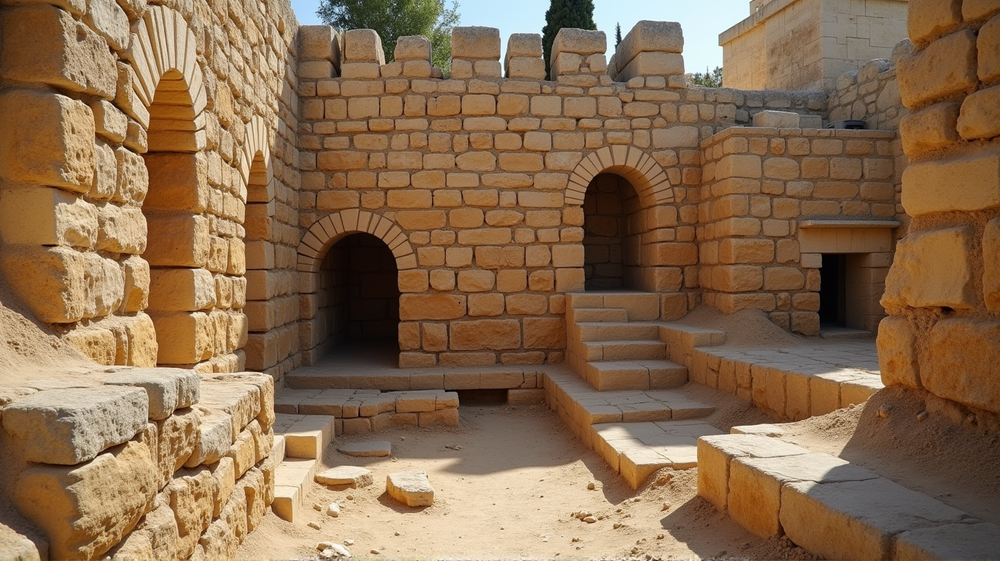
Archaeologists in Jerusalem have made a monumental discovery, unearthing the longest continuous section of ancient walls surrounding the city—a discovery that hints at the storied past of the Hasmonean Kingdom. The find is not just a testament to the era’s engineering marvels but also suggests a crucial ceasefire agreement between warring kingdoms centuries ago. Recent excavations completed last week have brought to light what experts believe could be evidence of a 2,100-year-old truce brokered amidst sieges and territorial tensions.
The Hasmonean Wall: A Testament to Resilience and Conflict
Encompassing around 164 feet with a robust width of 16 feet, the excavated wall foundation speaks volumes of its time. Built a few decades after the Hanukkah story, the wall signifies the Kingdom’s resilience and strategic prowess. This excavation comes as a continuation of the discovery of ancient coins last year, marking another “archaeological Hanukkah miracle,” according to researchers.
The Dismantling Mystery: A Symbol of Peace
One of the most poignant features of this historical find is the wall’s dismantling. Uneven breakage from war is notably absent; instead, the remains suggest a deliberate dismantling—a symbolic act of peace, as per Dr. Amit Re’em from the Israel Antiquities Authority. According to ancient historian Flavius Josephus, the dismantling was part of a ceasefire agreement initiated by Jewish King John Hyrcanus I in 132 or 133 B.C., exchanging King David’s treasured silver and hostages with Hellenistic King Antiochus the Seventh. As stated in CBS News, this arrangement required the symbolic demolition of the Hasmonean fortifications.
Transformations Through Time
The significance of this site transcends its ancient origins. Initially serving as part of the Hasmonean Kingdom’s defenses, the site later transformed into a pivotal location through various historical eras. Beneath the abandoned Kishleh prison building’s layers, archaeologists uncovered relics spanning from Middle Age dye pits to remnants used by the British military in the 1940s.
Preserving History for Future Generations
The Tower of David Museum plans to honor these newly uncovered treasures by integrating them into their exhibitions. Plans include a floating glass floor to allow visitors to view the archaeological slice of history while walking through Jerusalem’s ever-evolving narrative. Expected to take two years, these renovations promise to add another layer to the intricate story of this sacred city.
Coins and Further Discoveries: Layers of a Complex History
Adding to the historical richness, last year’s finding of ancient coins belonging to King Alexander Jannaeus, descendant of the Hasmonean dynasty, deepened the connection to Jerusalem’s storied past. More recent discoveries, like the 5,000-year-old wine press, continue to highlight Israel’s ancient history. These archaeological endeavors reveal not just artifacts but a tangible connection to moments of peace, devotion, and transformation in Jerusalem’s enduring story.