Bridging the Gap between Academia and Emergency Response
At a local fire station in Fivepoint, the Penn State College of Medicine (COM) classroom came alive in an innovative way. Michael Ebert, a committed student and Emergency Medicine Technician (EMT), championed an initiative that translated medical education into essential emergency care practices.
The Driving Force Behind the Initiative
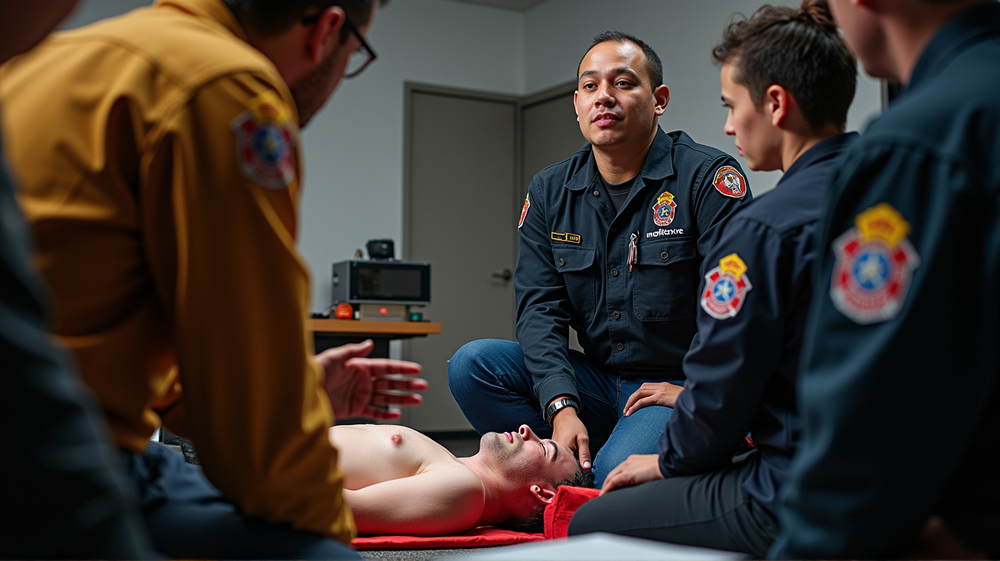
Driven by a desire to create real-world impacts, Ebert curated a hands-on program focused on cardiac arrest responses. A mix of approximately 45 firefighters and EMS professionals from three local departments were united under this cause, echoing the College’s belief that practical knowledge can fortify community services.
Anatomy of a Life-Saving Workshop
Set against the backdrop of the Fivepointville Fire Department, the partnership between Penn State’s Anatomy Graduate Program and the Fivepointville Ambulance Association set the stage for this transformative training session. The session tackled every aspect of a cardiac arrest call, emphasizing the role of academic medicine in everyday emergency response.
A Multifaceted Learning Experience
Four interactive stations provided a deep dive into cardiac science and emergency practices. Future educators and healthcare leaders practiced CPR, AED use, and advanced resuscitation alongside teamwork strategies. This immersive setup strengthened the connection between academic learnings and frontline applications.
Shaping the Future of Community Health
Michael Ebert’s vision wasn’t just about training; it was about nurturing a supportive environment where collaboration and innovation lead the way. By embedding hands-on learning with service and partnership, the training not only saves lives but shapes a community ready to face health challenges together.
“As future educators and healthcare professionals, it’s about supporting frontline responders and collaborating with our daily community systems,” Ebert emphasized, reflecting on his broader responsibility to extend the impact beyond personal growth.
According to Penn State Health News, initiatives like Ebert’s are elevating the role of academic medicine in community health.
Moving Forward with Impact
The impact of academic medicine is tangible and profound. Programs like these showcase how medical knowledge can powerfully integrate with community endeavors, ultimately improving health outcomes and enhancing emergency response efficiency in our cities.
By focusing on translating education into action, Michael Ebert exemplifies how a single endeavor can ripple outwards, fostering a healthier, more prepared society.