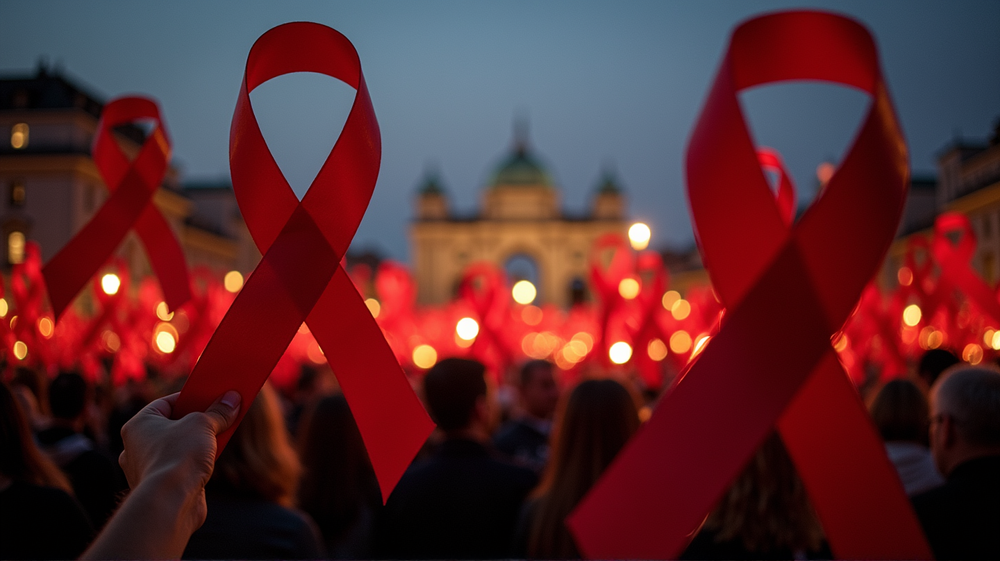
In a controversial decision, the Trump administration has dramatically altered its approach to World AIDS Day, bringing an abrupt end to federal commemorative messaging, a tradition that has lasted for over 37 years. The State Department’s recent directive to avoid public promotions for World AIDS Day has left many in shock and concern about the implications for ongoing global HIV/AIDS efforts.
A Stalwart Tradition Comes to an End
World AIDS Day, established in 1988, has long served as a beacon of hope and remembrance for the millions affected by the AIDS pandemic. It was a day that transcended borders, uniting people worldwide in a collective fight against a devastating disease. A nation’s recognition of this day not only honors those who have passed but emphasizes continued commitment to eradicating HIV/AIDS.
Policy Shift: Silence the Message
The recent instruction from the State Department, a move endorsed by President Trump, marks a stark departure from previous administrations’ public commitments. This new policy line mandates the complete absence of federal messaging for all commemorative days. According to an internal email, federal personnel are instructed to attend locally organized events sans speeches, underscoring a shift towards minimizing government involvement in public commemorations.
The Global Impact of Funding Cuts
The global response to HIV/AIDS has dramatically benefited from U.S. investments through the President’s Emergency Plan for AIDS Relief (PEPFAR). To date, PEPFAR’s initiatives have saved an estimated 26 million lives. However, with the proposed $1.9 billion cuts to this pivotal program, the future of many life-saving interventions hangs in the balance. As stated in The Independent, such reductions in aid can disrupt vital services, leaving countless individuals without access to essential medications.
U.S. Legacy: A Legacy at Risk
Under Trump’s policy, there is an apparent preference to shoulder responsibility with foreign governments, reducing U.S. leadership in global HIV/AIDS efforts. Observers suggest that the abrupt policy shift could undermine decades of progress. In previous years, World AIDS Day stood as a testament to U.S. leadership and compassion; this year, silence replaces solidarity.
Looking Ahead: A Call to Action
Many are imploring for a return to the compassionate strategies of past administrations. Without federal support, private and non-governmental organizations could find themselves on the frontlines, tasked with filling the gap left by this policy change. The uncertainty surrounding the future of AIDS funding calls for urgent advocacy to ensure that the advancements made in the fight against HIV/AIDS are sustained and further strengthened.
Engage in this urgent dialogue, and examine the implications of these recent policy shifts. Share your thoughts in our commenting forum and be a part of a conversation that hopes to shape a favorable future for global health initiatives.